Jewellery Glue
Jewellery glues, adhesives and glazes are essential for many jewellery making projects you’ll come across on your journey. We have a wide range of high quality adhesives for numerous jewellery making projects, all at affordable prices. Compare our glues in a table here.


A Guide to Jewellery Glue
Jewellery glue is a crucial component in the creation of pieces of jewellery. It can be used to secure cord ends, cabochons, bead caps and to decorate beads and charms themselves. It can be difficult to select the perfect adhesive for your project, but it is critical to utilise the ideal one.
Craft and jewellery glues are available in a variety of strengths, with a variety of applicators (including precision tips), and are compatible with a variety of materials. Before you choose your glue, consider what materials you intend to use it with and whether it has the necessary strength. It is expensive and dries up rapidly if not properly stored.
What kind of jewellery glue should you be working with? Jewellery glue can literally be what holds your designs together, so choosing the right kind is very important. When creating metal, plastic and gemstone jewellery, you'll want a very strong glue so they can withstand the rigours of daily wear - no matter how hard you try, no matter how much you love your creation, nothing lasts forever. So if you're having trouble getting a strong bond, then maybe it's time to change your adhesive. But with so many out there, which types should you choose?
Choosing the Right Type of Glue for Jewellery Making
Each glue has its pro's and con's, and specific materials it will work with. Always read the label to ensure that the glue you select can adhere to the surface you're working with. Not all types of glues are suitable for all surfaces, particularly metal, which is harder to glue. Below we have outlined the main things to bear in mind when choosing the right jewellery glue for your project.
Setting Time
Superglue dries to a strong bond nearly instantaneously, whereas other types of glue can take several hours or more to thoroughly set or cure. So if you need something done quickly, superglue comes in handy. However, if you want to form a more solid and long-lasting bond, you will have to wait a bit longer. Working times are also important to consider; if a glue dries quickly, you will have less time to work with it. Other, slower-curing glues will give you enough time to perfect your work.
Water / Temperature Resistance
Because jewellery is subjected to a variety of conditions, the glue used should be long-lasting and resistant to extreme temperatures. Some glues will melt in hot conditions and will thus be ineffective as a jewellery adhesive. People swim or bathe with their jewellery on, thus having water-resistant characteristics is important. It's also good if the glue is not affected by oils or creams, such as hand lotions or sun lotion.
Flexibility
You do not want to use a glue that dries rigid and has the potential to break easily. Because so many pieces of jewellery are subjected to forces like stretching and twisting motions, flexibility is essential to ensuring that the item can keep its strength without shattering into pieces. In short, you should choose a glue that is flexible enough to allow for movement but strong enough to hold your piece together.
Ease of Application
When working with jewellery, working with little parts can be challenging, and applying glue can be stressful if it gets all over the place. Some glues are equipped with fine nozzles that allow for more accuracy when applying the glue to small beads and other intricate spots. For a strong bond, the glue needs to have a decent consistency, meaning that it shouldn't be too runny and shouldn't be extremely thick either.
Setting Colour
When making jewellery, you will almost always want to use a glue that dries clear, so any parts that would be seen if the glue were opaque, are almost invisible. In addition, you are free to make more small errors without much cause for concern since they will not be apparent to anybody else. Epoxy glues may dry with a small yellow hue, which may highlight defects more clearly than they would otherwise be seen. However, certain glues may be painted over, so it's possible that this won't be a problem in all circumstances.
What kind of glue works on metals?
Metals are hard to stick together. Jewellery glues must adhere to the surface of the metal and then penetrate into the metal itself in order to form a strong bond. Most jewellery glues contain polymers that melt at high temperatures. When applied to the metal, the polymer melts and bonds to the metal, creating a strong joint. It's also best to try and 'rough-up' the metal surfaces with sandpaper or similar, prior to gluing, to provide more surface area and make gluing it easier. Some glues cannot stick to metals. These glues usually contain solvents that evaporate quickly, leaving behind little adhesive residue.
What kind of glue works on plastics?
Plastics are even harder to glue than metals. Plastics are composed of long chains of carbon atoms. To create a strong bond between the glue and the plastic, the glue must break apart the carbon chain. A common way to accomplish this is by adding a catalyst to the glue. Catalysts are substances that speed up chemical reactions. Jewellery glues for plastics are generally solvent based. Solvent based adhesives evaporate over time, leaving behind a sticky residue.
What kind of glue works on glass?
Glass is another challenging material to glue. Glasses are made up of silica molecules, which are extremely weak. Glue must be able to penetrate the surface of the glass and bind to the molecules inside. The right glues contain chemicals that react with the glass, causing the glue to bond to the glass.
What kind of glue works on wood?
Wood is one of the easiest materials to glue. Wood contains cellulose fibres that easily absorb water and swell. Glue penetrates the wood and binds the fibres together with a strong bond. Either all-round jewellery glues or specialist wood glues are best here.
What kind of glue works on enamel?
Enamel is a hard ceramic coating applied to metals such as brass, bronze, pewter, and stainless steel. Because enamel is very brittle, it requires special adhesives to keep it intact during normal wear. Jewellery glues that work best on enamel are those that contain polymers, which are long chains of molecules that form strong bonds between two surfaces. Polymer adhesives are available in liquid form, which must be mixed before being applied. Once applied, the adhesive dries quickly, usually in less than 30 minutes.
What kind of glue works on porcelain?
Porcelain is a hard, non-porous ceramic material made up of silicon dioxide and aluminium oxide. Like enamel, porcelain requires special adhesives for a strong bond. Most porcelain glues are water soluble, meaning that they dissolve easily in water. Water solubility means that the glue dissolves into the surrounding solution, allowing the piece to become separated from the substrate.
What kind of glue works on sterling silver?
Sterling silver is a soft alloy consisting mostly of 92% silver and 8% other metals. It has been popular since ancient times, and continues to be widely used today. Jewellery glues suitable for sterling silver are generally water based. These adhesives are safe around skin and eyes, and do not leave behind toxic residues.
What kind of glue works on copper?
Copper is a malleable metal that comes in various colours. Its high resistance to corrosion makes it ideal for jewellery applications. Jewellery glues suited for copper are generally water based, however, there are also specialty glues that are formulated specifically for copper.
All-Purpose Glues
-
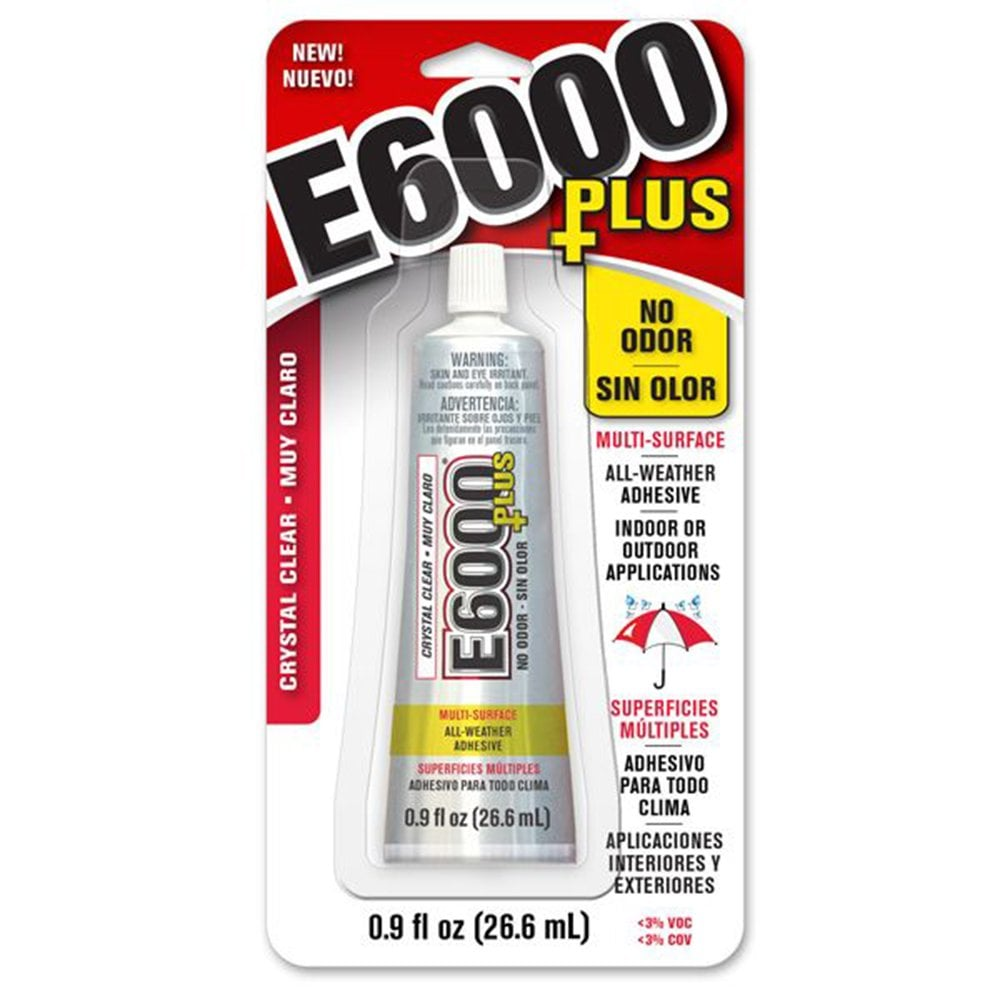
E6000 Glue - an incredibly versatile all-purpose glue, which is a silicone-based industrial strength one-part epoxy adhesive. It can be used to glue wood, metal, glass fibreglass, ceramics, mosaics as well as, leather, rubber, vinyl, most plastics, masonry and concrete to each other.
-
GS Hypo Cement - Hypo Cement is an ideal all-purpose glue for bonding all plastic, beads, ceramics, glass and more. It dries clear and sets in 10 minutes, and a super fine nozzle for a precise and professional application so is perfect for working on a smaller scale.
-
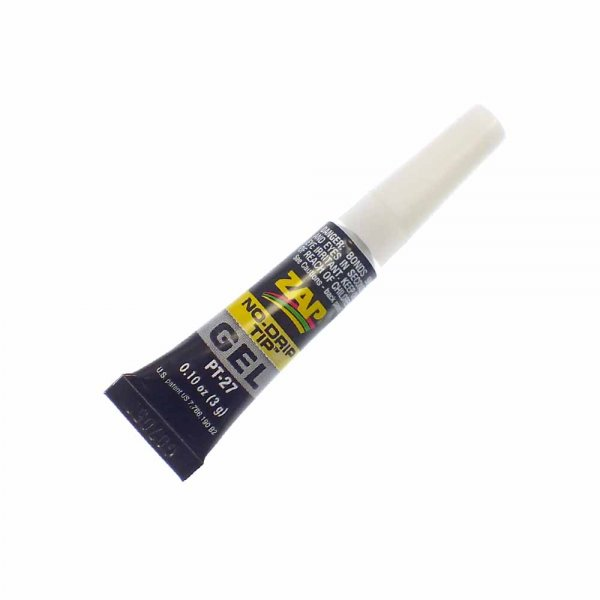
Zap Gel Jewellery Super Glue is a non-drip jewellery gel which is perfect as an all-purpose glue. It’s the strongest cyanoacrylate glue available. Zap can be used for a strong bond on; metal, leather, porcelain, wood, plastic and rubber. It has a tapered nozzle to help with an accurate application. Ideal for bonding the ends onto a kumihimo braid, because it’s a gel it doesn’t soak into the cord, it just fills the gaps in between the cord and the fastening to create a super secure bond, the gel base also prevents bleeding.
Glazes
-
Judikin's Diamond Glaze is a glue and a glaze all rolled into one. Perfect for sealing pictures to bezels to create a raised glass-like finish, or mix with water to create a thin lacquer finish. In addition to using it in its natural state, you can also mix it with inks, dyes, pearlescent pigments, and watercolours to create something that is a little bit different from the norm. Ideal for gluing glitter to plastic and glass surfaces.
Photo Glues
- Using the Dot & Dab Photo Glue, you can ensure that your photographs always appear their very best. This non-toxic, lightweight glue is perfect for use in scrapbooks and photo albums since it enables you to reposition your photos before they dry and become permanently adhered to the page. Your cherished images will not be harmed in any way by the quick-drying, acid-free process, and you will be able to focus all of your attention on the task of keeping your memories safe.