
Nylon Thread
Nylon thread or cord, is a staple stringing material for jewellery makers who want strength without visual bulk. Clear, lightweight, and reliable, it is widely used for illusion necklaces, floating bead designs, and discreet stringing where the focus stays on the beads rather than the thread.
This category includes monofilament nylon and illusion-style cords suitable for both simple projects and detailed work.
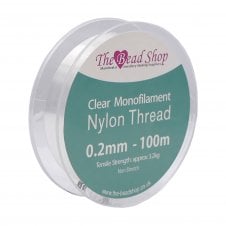
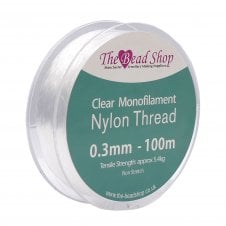
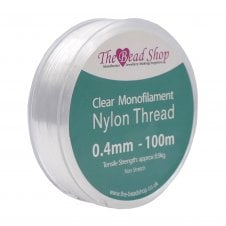
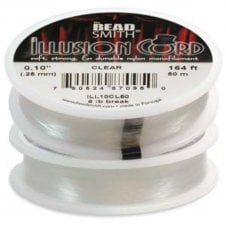
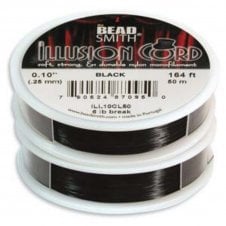
What Is Nylon Thread?
Nylon cord or thread, often referred to as monofilament or illusion cord, is a single-strand synthetic thread made from polyamide. It is smooth, non-porous, and naturally resistant to moisture, stretching, and abrasion.
Because it is transparent or near-transparent, nylon thread virtually disappears once strung, making it ideal for designs where beads appear to float on the skin or sit cleanly against one another without visible stringing material.
Why Use Nylon Cord?
Nylon thread offers a strong balance of durability and discretion.
It has a higher tensile strength than cotton cord or silk of the same diameter, while remaining thin and lightweight. This allows you to string glass, crystal, and metal beads without adding unnecessary thickness to the design.
It is also resistant to water and oils, making it suitable for jewellery that will be worn regularly rather than kept for occasional use.
Common Jewellery Applications
Nylon thread is commonly used for:
Illusion necklaces and bracelets
Floating bead designs
Lightweight pendants and drops
Temporary or adjustable jewellery
Practice stringing and layout work
It is particularly useful when paired with crimp beads, clamshells, or glue-in end findings, depending on the finish required.
Thickness and Handling
Nylon cord is available in a range of diameters, from very fine threads for delicate work to thicker options for added strength.
Thinner threads offer maximum invisibility but require careful handling and secure finishing. Thicker threads are easier to work with and more forgiving, while still remaining discreet once worn.
Cut ends can be sharp, so clean cuts and proper finishing are important for comfort and durability.
Strength, Care, and Longevity
Nylon thread does not rot, absorb moisture, or weaken with normal wear. It holds its shape well and resists fraying better than natural fibres.
For best results, knots should be secured carefully and trimmed neatly. In some designs, a small amount of jewellery glue can be used to lock knots in place for added security.
A Practical Choice for Clean Designs
Nylon thread is a reliable option for makers who want clean lines, minimal visual interference, and dependable strength. It suits both beginners experimenting with simple projects and experienced jewellery makers producing refined, lightweight pieces.
Whether you are creating floating bead necklaces or discreet everyday jewellery, nylon thread remains one of the most practical stringing materials available.