
Kumihimo
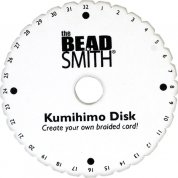
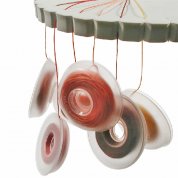
A popular Japanese art, Kumihimo is a fun and rewarding technique that allows you to create stunning weaved braids. Here at The Bead Shop we have everything you need to turn your newly weaved braids into fabulous jewellery pieces, including Kumihimo disks and Kumihimo braiding cord. All it takes it a little creativity to master the art of Kumihimo braiding and The Bead Shop is here to help you every step of the way! See our guide to Kumihimo at the bottom of this page.
What is Kumihimo?
What is Kumihimo Used For?
What Can You Use To Make Kumihimo Braids?
In Japan, there are two main types of kumihimo: one uses only natural materials such as bamboo, cotton, hemp, linen, silk, gold, silver, copper, wood, stone, glass, leather, paper, metal, plastic, and even human hair. The other type uses synthetic fibers such as nylon, rayon, polyester, acrylic, and polypropylene.
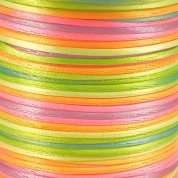
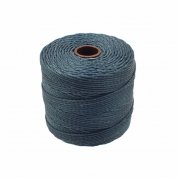
In the west, a variety of materials can be used to make Kumihimo braids from Rattail Satin and Chinese Knotting cord to ribbons, Superlon and even Craft Wire, making Kumihimo braiding a fun, versatile and creative way of making jewellery. There are so many different patterns that you’re unlikely to ever run out of inspiration and ideas. Whether you’re a fan of minimalist or elaborate designs, Kumihimo is an art that gives you plenty of creative freedom.
Anyone can try their hand at making this type of jewellery and if you’d like to give it a go, there are numerous Kumihimo braiding books to help you get started. There are also Kumihimo Jewellery Kits for Beginners which give you everything you need to make your own creations. Other than that, all it takes is creativity and lots of practise to master this ancient Japanese art.
The Structure Of Kumihimo
The process of making kumihimo braids starts with plaiting the hair using a comb. Then, the plait is twisted around itself and tied off with a knot. Finally, the ends of the braid are secured with a decorative pin.
But there are many ways to structure a piece of kumihimo. Some pieces may be made up of just one knot while others may contain hundreds. There are three major categories of kumihimo structures: flat, round, and square. Flat kumihimo consists of straight lines and curves. Round kumihimo is circular and usually contains no straight lines. Square kumihimo is rectangular and usually contains straight lines.
Types of Kumihimo Braids
Kumihimo braiding techniques come in a wide variety. There are many variations of Kumihimo braids that use anything from four to one hundred or more strands. You can create braids with various structures by combining several braiding patterns. Crafters must be cautious to catch mistakes as they go since some designs involve more than 400 stages. For example, if you didn't realise you made a mistake at step 35 until step 76, you're going to have to undo every step until you get back to #35. Reversing is difficult, but it may also teach you a lot!
Some common styles of Kumihimo braids are listed below.
Single Braid
Double Braid
Triple Braid
How much cord do I need for Kumihimo?
The dimensions of the finished braids are approximations and will change based on the braiding tension. For optimal results, keep the rope tension constant as you round the wheel.
The 3 to 1 Ratio states that you should multiply the desired braid length by three. For instance, each string has to be 60 inches long if you want a 20-inch necklace.
How many beads do you need for a Kumihimo bracelet?
The quantity of beads you'll need is an estimate. You may need to add or remove beads since there will be very tiny differences in bead size (due to beads usually being hand-made) and braiding tension from person to person. To get your desired completed length, you will typically need the following amount of beads on each strand:
- Size 6 seed beads and size 8 Delica beads fit approximately six beads per inch on each string.
- For size 8 seed beads, you will need approximately 7 beads per inch on each strand.
- For size 11 seed beads, you will need approximately 9 beads per inch on each strand.
- For size 11 Delica beads, you will need approximately 11 beads per inch on each strand.